Shikimate Pathway Enzymes
Plants
and microorganisms rely on the shikimate pathway to produce
essential aromatic compounds, especially the aromatic amino acids
(Phe, Tyr, and Trp). Because mammals, including humans, obtain
these amino acids through the diet, they do not produce the
enzymes of the shikimate pathway, making these attractive targets
for new antitubercular agents. We are
working to identify and characterize new compounds that inhibit
both shikimate dehydrogenase and shikimate kinase (see below).
These enzymes catalyze two consecutive steps in the pathway, and
simultaneous inhibition of both targets is anticipated to limit
development of resistance to antibiotics based on these leads.
We are bringing multiple computational and experimental tools to
bear on this problem, including docking, molecular dynamics,
enzyme binding and inhibition kinetics, X-ray crystallography,
targeted intrinsic protein fluorescence, and 19-F NMR.
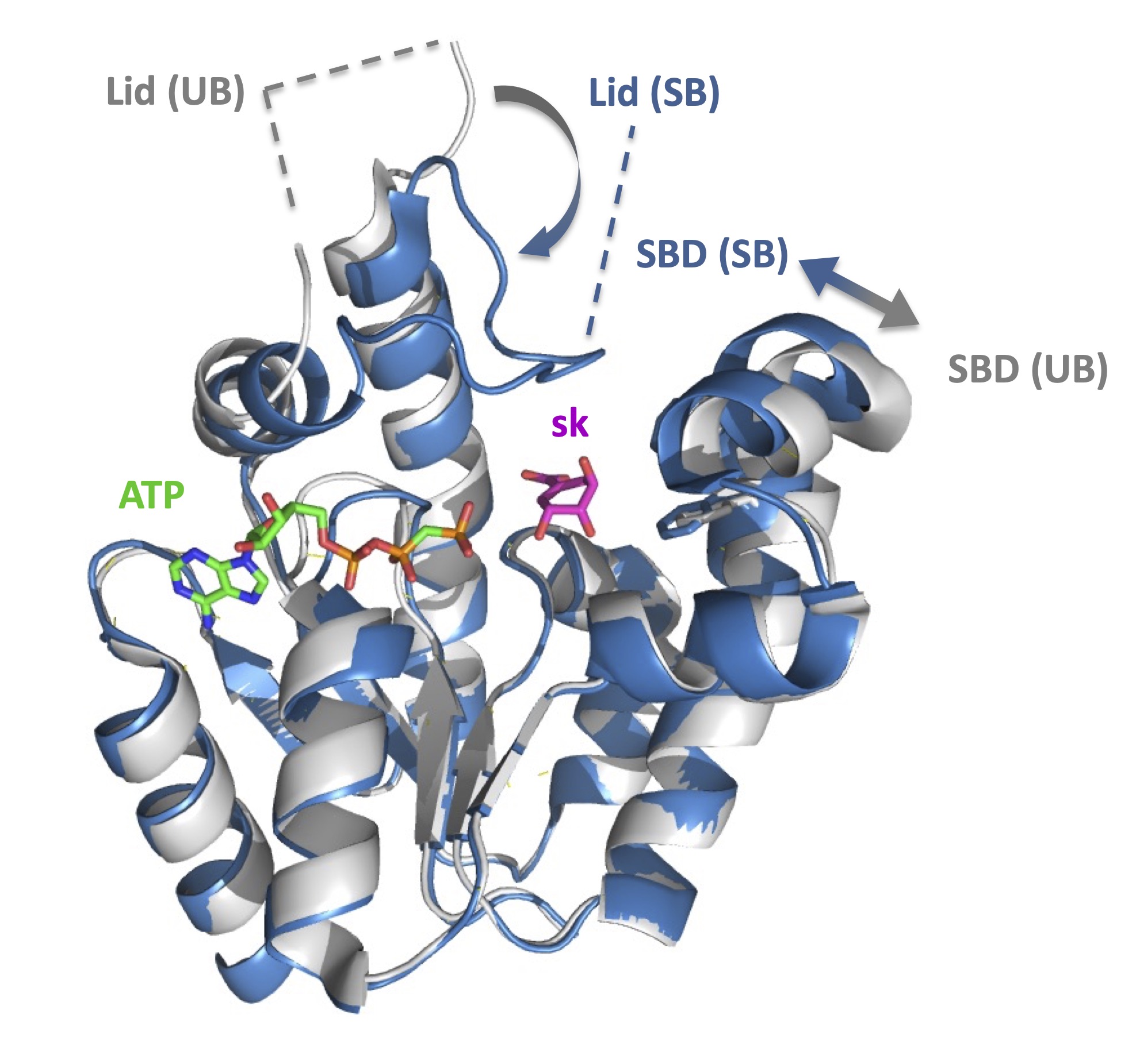
Image:
Ribbon structure representation of shikimate kinase.
The open structure (without shikimate) is shown in gray.
The closed stucture (with shikimate [sk] and ATP) is shown in
blue.